You Built Your Career on Being the Woman Who Could Handle Anything. So What Changed?
You used to trust your brain, your judgement and your ability to stay on top of anything. Now your brain stalls, your patience disappears and things that once felt effortless suddenly take far more out of you.
You haven’t lost your edge. You’ve lost access to it.
Discover the overlooked connection between stress, menopause and performance - and how to get your edge back.
"It's made me a better person, boss, partner, and daughter."
— Rachel K.
★★★★★
"Some days it feels like I've had hours of extra sleep or plugged into a charging station."
— Kate
★★★★★
"I got my precision back. The menopause didn't stop. The noise underneath it did."
— Claire
There is a second thing happening underneath the hormonal transition
Almost nobody is naming it in the same conversation.
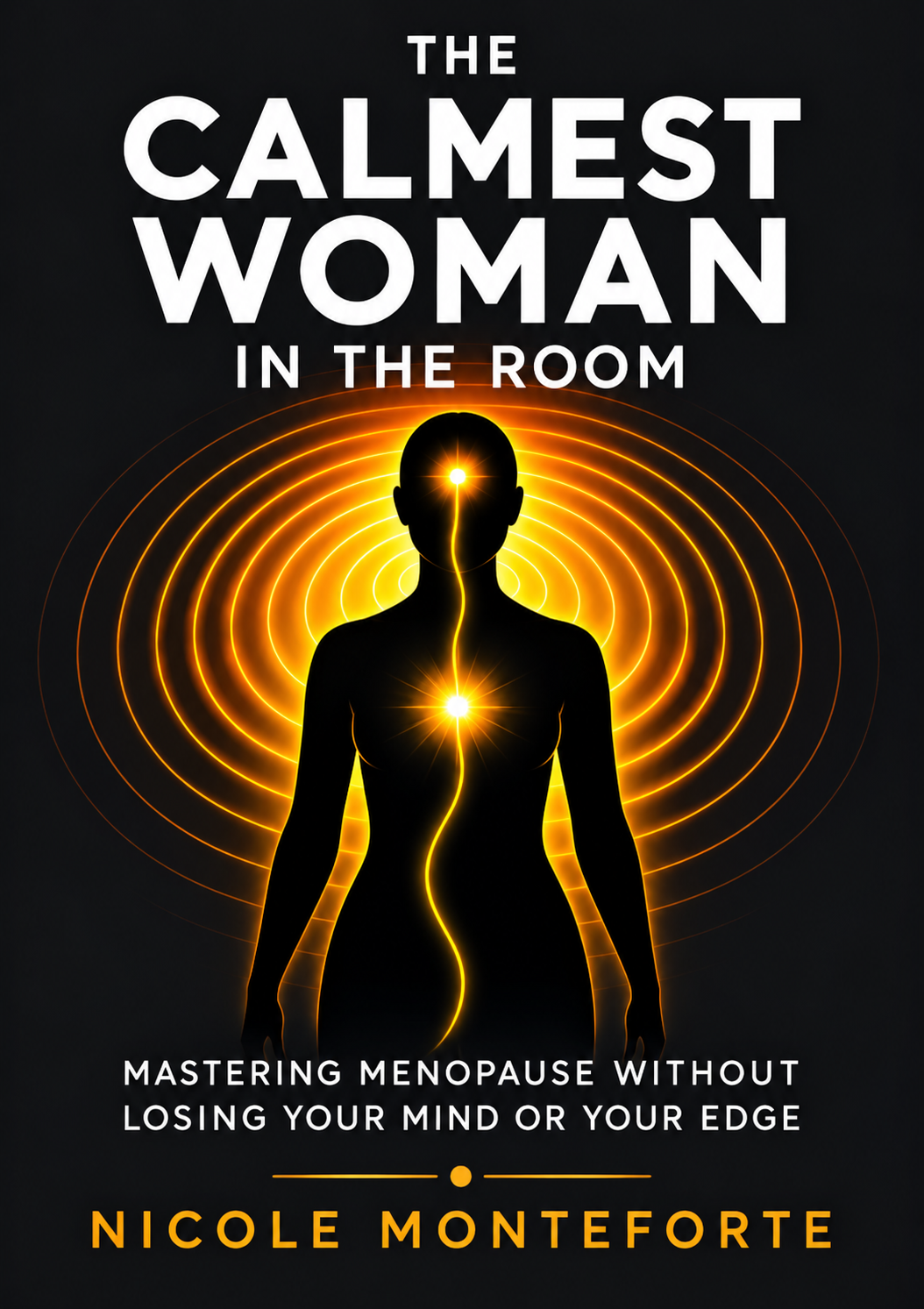
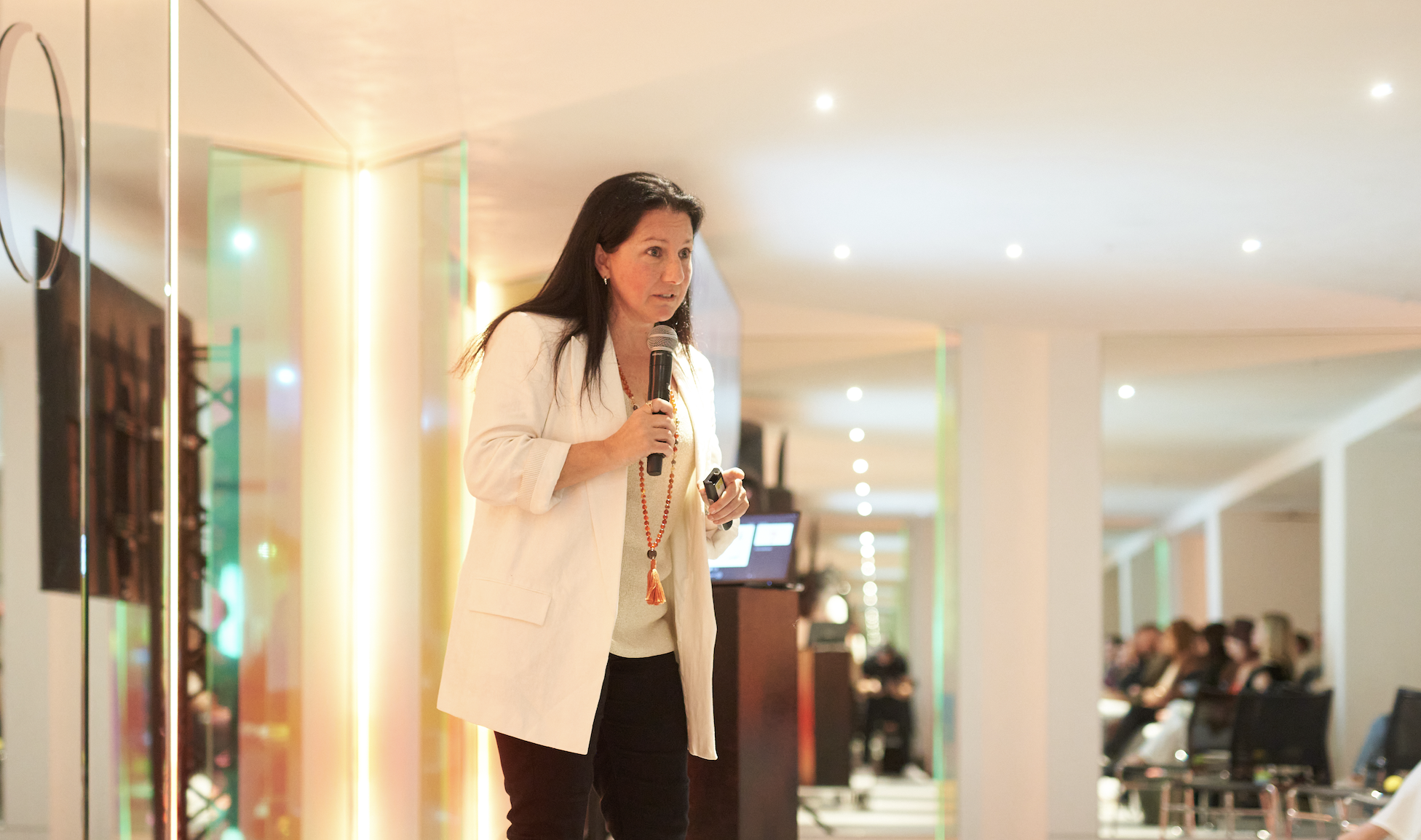
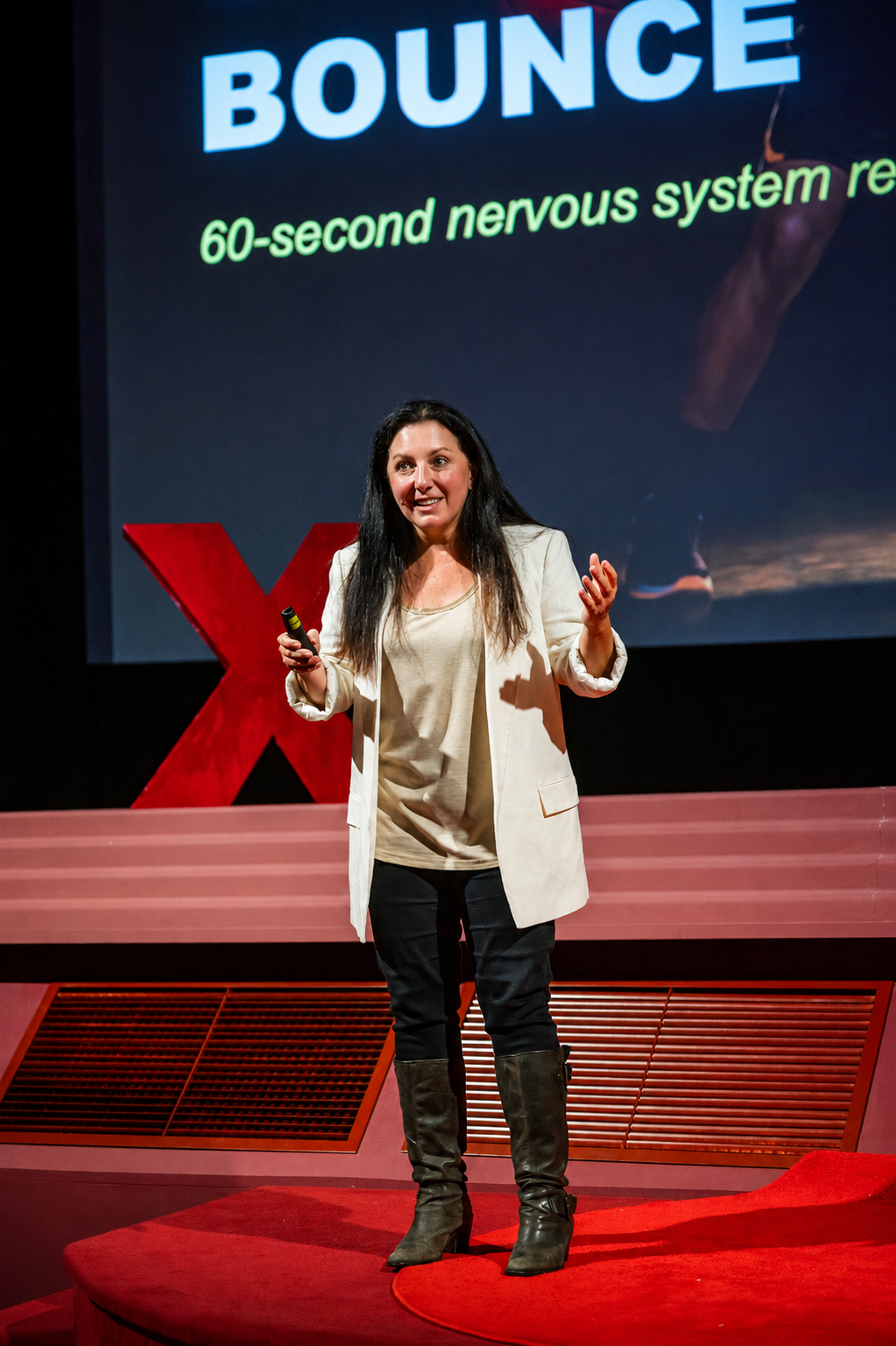
Nic Monteforte, a Vedic Meditation teacher and high-performance coach who spent two decades leading and advising under serious pressure, wrote the book she wishes someone had handed her twenty years earlier.
Get your copy below and read the explanation first.
The Problem
6:14am. You wake after a night that was fine, not great. For about four seconds things feel normal. Then something floods your body, heart hammering, breath shallow, a wave of dread with absolutely nothing behind it. You haven't had a single thought yet.
By 9am you're in a meeting you've run forty times. Someone asks a question you have known the answer to for fifteen years. You reach for it and find sand. You talk around it. You buy time with a question of your own. You get there.
Nobody noticed. You think nobody noticed.
Then, lying in the dark that night, the thought you've been having for months and have said out loud to nobody: "What if I'm losing it?" Not your temper. Not your composure. Your edge. The specific thing that made you the best person in that room.
If any of that sounds familiar, you're not alone, and you're not broken. Something like that thought has been sitting quietly in a great many capable women, at exactly the point in their careers when everything should be at full altitude.
Here's what almost nobody has explained. The problem isn't your memory, your resilience, or your age. For roughly twenty years your body has been carrying stress that never got to finish: the reaction you swallowed in front of the board, the meeting you replayed at 11pm, the night you put the children to bed and went back to work. Nic calls that accumulated load stress debt. Estrogen was quietly buffering it the whole time. You never knew the buffer existed, because you never needed to.
Perimenopause doesn't create the debt. It removes the buffer. The symptoms are the bill arriving.
The Shocking Truth About Why You're Still Stuck
The belief goes like this: menopause is a hormone problem, so the answer is hormones. Replace what's declining and the rest follows.
It's a reasonable belief. It's also incomplete, and the gap is where a lot of very competent women get lost.
Nic is on HRT herself and says plainly that it has helped her. What it doesn't do is touch the twenty years of stress debt sitting underneath. Claire, a CFO who came to her, put it this way: "I thought HRT would fix everything. It helped the temperature stuff. But my head still wasn't right, and I still had this constant undercurrent of unease I couldn't explain. Nobody could tell me why."
Estrogen was never only a reproductive hormone. It was also running the system that switches your stress response off. Not the switching on, the switching off, which is an active process nobody talks about. Through perimenopause that regulation destabilises, so the same email, the same difficult colleague, produces a longer, louder stress response than it would have at 38. The book calls this the Menopause Stress Amplifier. Same woman. Same pressures. A system that now runs hotter on every unit of them.
Why Traditional Approaches Keep You Trapped
The irony is a little brutal. The women who most need a stress practice are often the least able to sustain a conventional one.
Mindfulness apps and concentration-based meditation ask you to focus on your breath, hold your attention still, clear your mind. That is precisely the one cognitive task this transition has made hardest. So you sit down already depleted, your mind wanders, and you file another small failure at something you used to be able to do. That isn't you being bad at meditation. You were handed the wrong tool for the job.
Supplements help some women with specific symptoms and are worth keeping if they're working for you. They're simply answering a different question.
Then there's pushing through, the default for anyone who has outworked every problem so far. It works beautifully, right up until it meets the amplifier. More pushing means more cortisol. More cortisol means less access to the thinking part of your brain. Less access means it all feels harder, so you push harder. That loop is what ends careers. Not the menopause.
See, I Was Just Like You…
May 2014. Nic was running her own company, turnover north of twenty million and growing, recognised as the best in her industry, speaking on stages internationally. Before that, a corporate role running a two hundred and fifty million dollar operation with thousands of staff underneath her. Seventy-hour weeks. Stress worn like a badge of honour, because that was the proof you were pushing further than everyone else.
Underneath it, a second story nobody had connected to the first. Severe endometriosis diagnosed at 23. Roughly ten surgeries between her mid-thirties and early forties, taken between board meetings and school runs, with recovery time she mostly didn't take. A hysterectomy at 42. Then another surgery, because one ovary was still overproducing the estrogen feeding the disease. Two decades of building everything she built inside a body already at war with itself.
By June 2014 the company was gone. The house, the car, the reputation, all of it. Half a million dollars of debt with no income to service it. Two children to feed. Her stress measured, by health professionals, in the highest percentile of the scale.
The last straw arrived years later, three days before the world shut down, when a relationship she thought she'd earned ended. A friend saw the state of her and said, go and learn this technique. Nic told her she was already doing everything. Meditating. Exercising. Therapy. Her friend said, just trust me, this isn't like anything else.
Two decades of discipline hadn't touched it. Twenty minutes, twice a day, of doing nothing at all did.
The Effortless Revolution
The practice is Vedic Meditation, taught in the same lineage as TM. Nic went through years of study and training to become a qualified teacher of it. She calls it effortless because that's exactly what it feels like once you're doing it correctly.
Rest isn't something you achieve. It's something you allow.
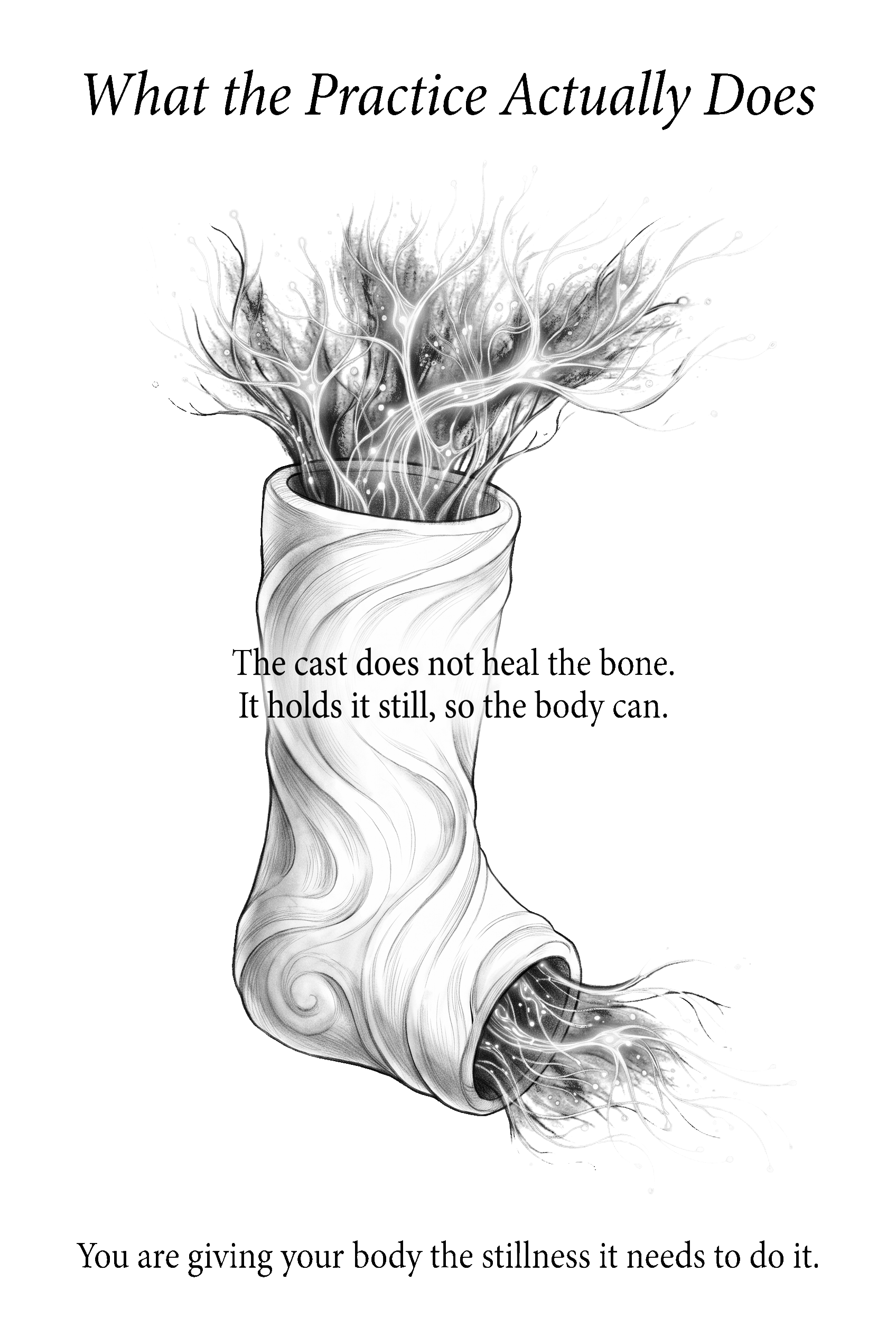
Think of a cast on a broken bone. The doctor doesn't heal your arm. They can't. They hold it still, in the right position, long enough that your body does the actual healing. The cast isn't the medicine. It's the condition that lets the medicine work.
Twice a day, for twenty minutes, this practice holds your nervous system still enough to drop into a rest deeper than sleep, and the system does the rest itself. You're not doing the healing. You're giving your body the stillness it needs to do it.
The Stress Debt Economy
Stress behaves like an economy: deposits, withdrawals, and a debt that compounds quietly in the background when the withdrawals keep outpacing recovery. The practice works on the two things the Menopause Stress Amplifier is actually made of, the load your system carries when nothing is happening, and how hard it fires when something does. Both come down together, which is why the relief reaches things that symptom-by-symptom approaches leave untouched.
01
Stress Debt Clearing
Your body drops into a rest deep enough to metabolise the stress chemistry it's been carrying, which is also what's been shredding your sleep and feeding the stress half of a hot flash.
02
Loop Completion Protocol
Twenty years of reactions you swallowed in order to perform, finally allowed to finish, without you having to consciously revisit any of it.
03
Capacity Building System
The long game. A nervous system that comes out of this transition steadier and more capable than the one you had before it started, which is the opposite of the story you've been told about this decade.
The book explains it, layer by layer, before anything is asked of you. Instant download.
What Others Are Saying
"Nic helped me reinvent my business and more importantly, me. She helped me morph into the confident leader I am today"
— MARY
"I'm up to over 450 consecutive days now. I sent Nic a screenshot when I hit 365 and told her the next one would be a thousand. It's often my favourite part of my day. And I have a fantastic life."
— Georgia
"Nic has stretched and developed me in ways I never imagined… I’ve never undergone such a rapid transformation in my leadership qualities."
— Kate
Proven Results
Diana, a litigation partner, was 47 when the transition arrived. Night sweats waking her repeatedly, hot flashes appearing in court, and the thing she'd told nobody: mornings where she woke in a terror so acute she'd lie completely still, running through every scenario that might justify it. There was never anything. She'd started sidestepping confrontational meetings in case the flush showed, which for a woman whose whole career was built on being formidable in exactly those rooms cut deepest of all.
"I hadn't told anyone I was thinking about stepping back. But I'd started looking at smaller roles. I thought maybe this was just what menopause was."
Her sleep came back first, inside the first few weeks. She told Nic that alone would have been enough. The morning terror eased next. The flushes softened, and the fear of them faded with the adrenaline that used to ride alongside them. She walked back into the rooms she'd been avoiding. Months in, she noticed she'd stopped bracing.
She didn't step back. She applied for managing partner. She got it.
"My only regret is not finding this two years earlier." Diana, Managing Partner
More From Women Who've Been Where You Are
"I got my precision back. The menopause didn't stop. The noise underneath it did."
— Claire, Chief Financial Officer
"For the first time in two years, I trusted myself again."
— Simone, Founder
"I still feel all the same emotions, but there's this space now between what happens and how I respond. In that space is all my power."
— Jane, CEO
What You'll Discover Inside
01
Two days, side by side
The before and the after of a single ordinary working week, written from the inside. Most women say this is where they first felt properly seen.
02
The Menopause Stress Amplifier
The specific reason the same woman who handled the same pressures at 38 is struggling with them at 48, explained in one clean mechanism.
03
Why the word isn't there
What's actually happening in your brain in the moment the answer won't come, and why it's a load problem rather than a capacity problem.
04
The hot flash is two events, not one
One part you can't change, one part you can, and what tends to happen to the second when the load comes down.
05
The bolt at 6am
The name for the dread that arrives before your first conscious thought, and why it's so often misread as anxiety.
06
The jacket that doesn't fit
The two mechanisms behind midsection weight that appears despite doing everything right for decades.
07
Your stress pattern
Four patterns, described so you can recognise yours, so what you do next is fitted to how this is actually showing up for you.
08
The Hormonal Moment Quick Protocol
What to do in the room. Mid-meeting, mid-negotiation, mid-sentence, when your body decides to stage a visible event at an inconvenient moment.
09
Three things to use today
Racquet therapy, vocal toning, and one for 3am. The tools Nic leaned on for years before she found the practice.
10
Why she won't pretend to teach it on the page
The honest explanation of why this technique is taught in person, and why that's the mechanism rather than gatekeeping.
Is This Right For You?
This is probably not for you if —
You'd like a book that tells you to slow down, step back, and accept a lower ceiling.
You want the hormonal side handled and nothing else looked at.
You'd prefer a wellness read. This one is about performance, and the argument is physiological.
You want a technique you can perform perfectly on the first try. This one asks nothing of you, which some very disciplined women find genuinely annoying at first.
This is for —
The woman who has been the composed one for twenty years and knows the difference between performing composure and actually having it.
Executives, founders, partners, senior leaders.
Women who are still delivering while something underneath quietly drains.
Women who would rather understand the mechanism than be told it's normal.
No. Dr Mary Claire Haver's The New Menopause covers the hormonal architecture beautifully, and Nic recommends it to every woman in this transition. This book covers the stress debt layer sitting underneath it, which the medical conversation largely hasn't reached yet. Many women read both.
I've tried meditation and I'm terrible at it.
Almost every woman says this, and it's nearly always based on concentration-based practice, the kind that asks you to focus and clear your mind. This works the other way around. The busier and more activated your mind is, the more it has to work with.
Do I have to give up HRT?
Not at all. Nic is on it herself. They address different layers, and plenty of the women in this book use both.
How quickly does anything shift?
Most women notice sleep first. The 3am waking tends to ease before anything else. The book walks you through the shape of it honestly, including the fortnight where things can feel a little scrappy before they settle.
I genuinely don't have time.
It's twenty minutes, twice a day. Before you decide, the book invites you to count what the current state is already costing you in re-reading, re-working, and recovering. For most women it comes out ahead.
Can I ask questions first?
Yes. Reach out any time. There's a complimentary conversation available at nicmonteforte.com whenever you'd like one, with no expectation attached.
Nic Monteforte.
Nic Monteforte is a Vedic Meditation teacher and high-performance coach. She spent more than twenty years in and around high performance, first as one of them and then as the person they came to when the pressure stopped being survivable, across businesses that ran from nothing to two hundred million in turnover. She has also lived two decades of severe hormone-related illness underneath the whole career, and navigated the abrupt hormonal shift after surgery using this practice as her primary tool.
That combination is unusual. There are performance coaches who have never sat with a nervous system in freefall, and meditation teachers who have never run a payroll or lost one. She teaches from the overlap, and she raised two children through the worst of it.
Her mission is simple enough: that no woman spends a decade outworking a war her own biology is losing, when the explanation was available the whole time. This is Book Two of the Calm Series.
Somewhere in the next few months
There could be a morning where you wake before the alarm and don't need coffee to become a person. A meeting where what you know simply arrives, instead of having to be dragged up one piece at a time. A room where you sit back, say less, and see it more clearly than anyone else in it.
She never left
The woman who
built all of this never left
She's been under a load nobody taught her how to set down. Start with the part that has to come first: finally knowing what's happening to you.